United Kingdom
 Ireland
 The Netherlands
 Belgium
 Italy
 Germany
 Luxembourg
 Switzerland
 Canada
 Middle East
 Saudi Arabia
 Yemen
 Bahrain
 Oman
 Kuwait
 Qatar

The screed is down, the pipework is buried in it and the flooring contractor wants a date. The trouble is that the building’s permanent boiler is still a drawing on the M&E programme. Drying screed with underfloor heating is one of the most effective ways to bring a floor to a finish-ready state. It only works with a controlled heat source. On most new builds and extensions, that means a temporary boiler for underfloor heating.
Andrews Sykes supplies boiler hire for underfloor heating (UFH) on new-build and existing construction projects. Electric, oil-fired and gas-fired options suit different duties and site conditions.
Why The Permanent Boiler Is Rarely Ready In Time
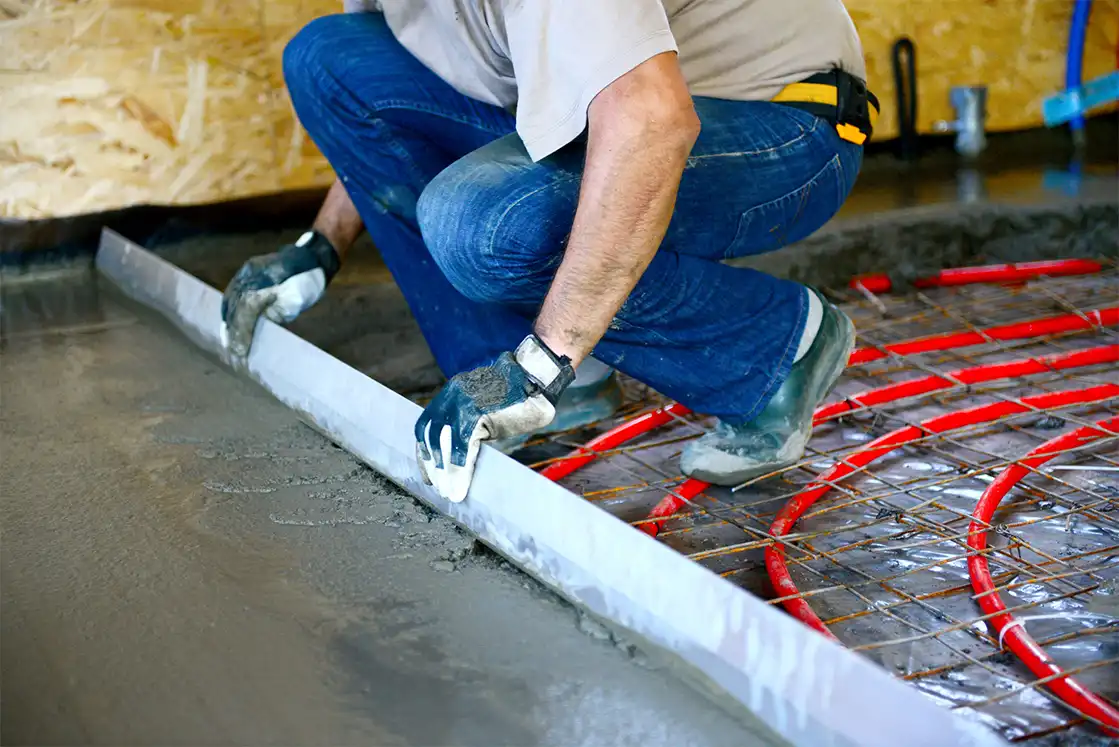
Laying screed over underfloor heating happens early in a fit-out. The plant room is often unfinished, or the gas supply is still weeks away. Waiting for permanent plant leaves wet screed sitting in the programme and holds up every trade behind it.
A hire boiler breaks that dependency. It connects to the UFH manifolds and circulates warm water through the pipework already in the screed. The contractor can then start the heat-up sequence the screed and UFH manufacturers call for. The same set-up also lets the M&E contractor commission the UFH circuits before handover. They can start once the screed has cured for the period its manufacturer requires. The installer should already have pressure-tested the UFH pipework to the system manufacturer’s requirements before laying the screed.
How To Commission Underfloor Heating: Flow Temperatures For Screed Drying
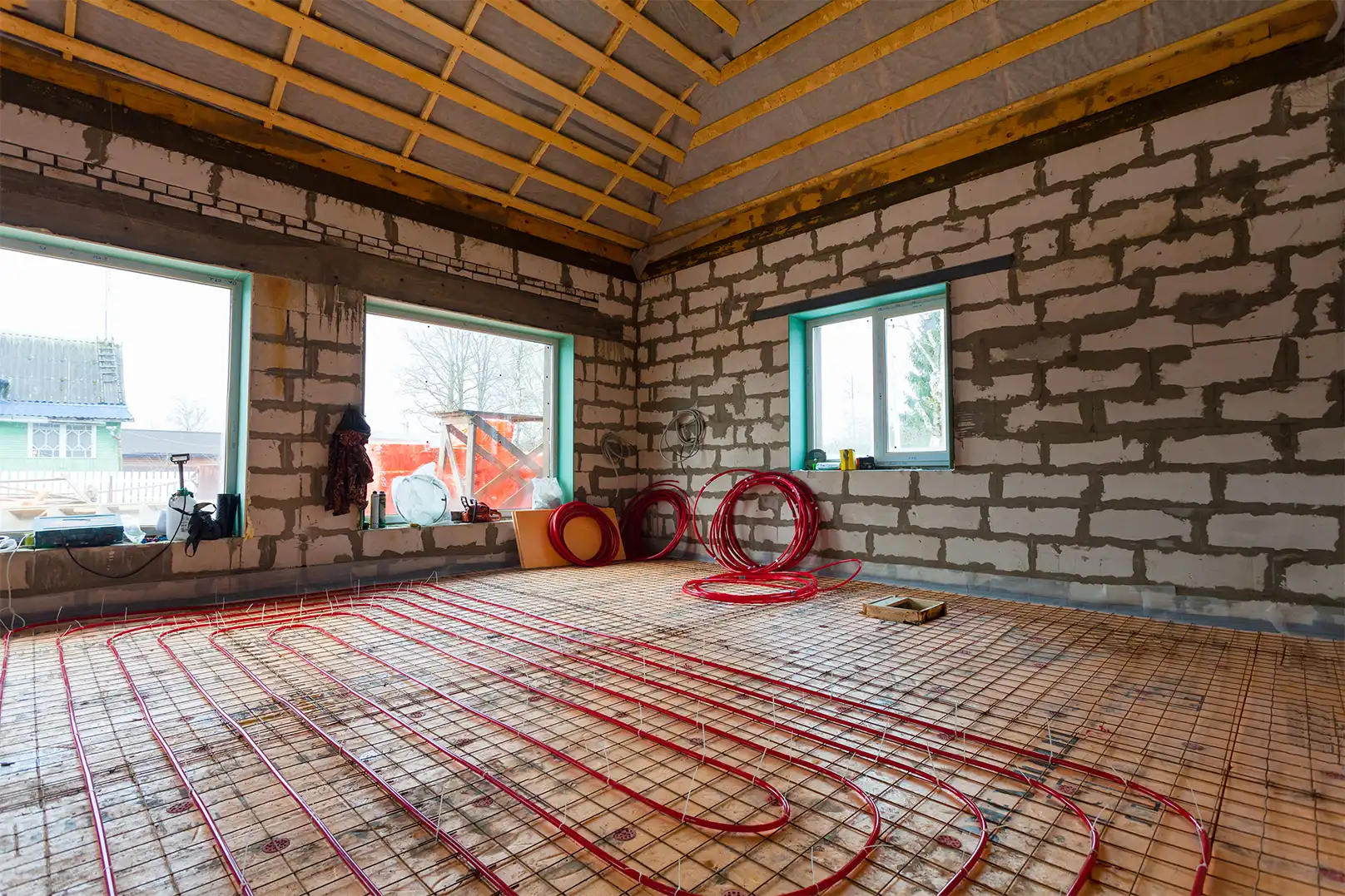
Screed undergoes dimensional changes as it cures and dries. Applying heat too aggressively can increase the risk of cracking, curling at joints or debonding. The aim is to raise the temperature in steps the screed can tolerate. That is why a hire boiler for screed work runs at low flow temperatures. There is no single heat-up schedule that suits every floor. The right timings and flow temperatures depend on the screed product, its depth and the UFH system. They always come from the screed and UFH manufacturers’ protocol. The sequence itself follows the same four stages.
- Let the screed cure first. No heat goes on until the screed has cured for the period its manufacturer states. Some calcium sulphate screeds permit earlier UFH commissioning than traditional sand-and-cement screeds. Even so, always follow the manufacturer’s stated curing period.
- Start at a low flow temperature. Heating begins gently and stays at a low setting for the first few days.
- Raise it gradually. The flow temperature goes up in small daily steps, never in one jump. It stops at the maximum the manufacturers allow.
- Hold, then cool down. Hold the floor at that temperature for a set period, then bring it back down step by step before any testing.
Whatever heat-up instructions your screed and UFH manufacturers specify, our boiler team will build a boiler solution to match. Record the flow temperature and date at each stage, as your screed or UFH manufacturer may ask for it.
Choosing A Screed Drying Boiler: Electric Or Fuel-Fired?
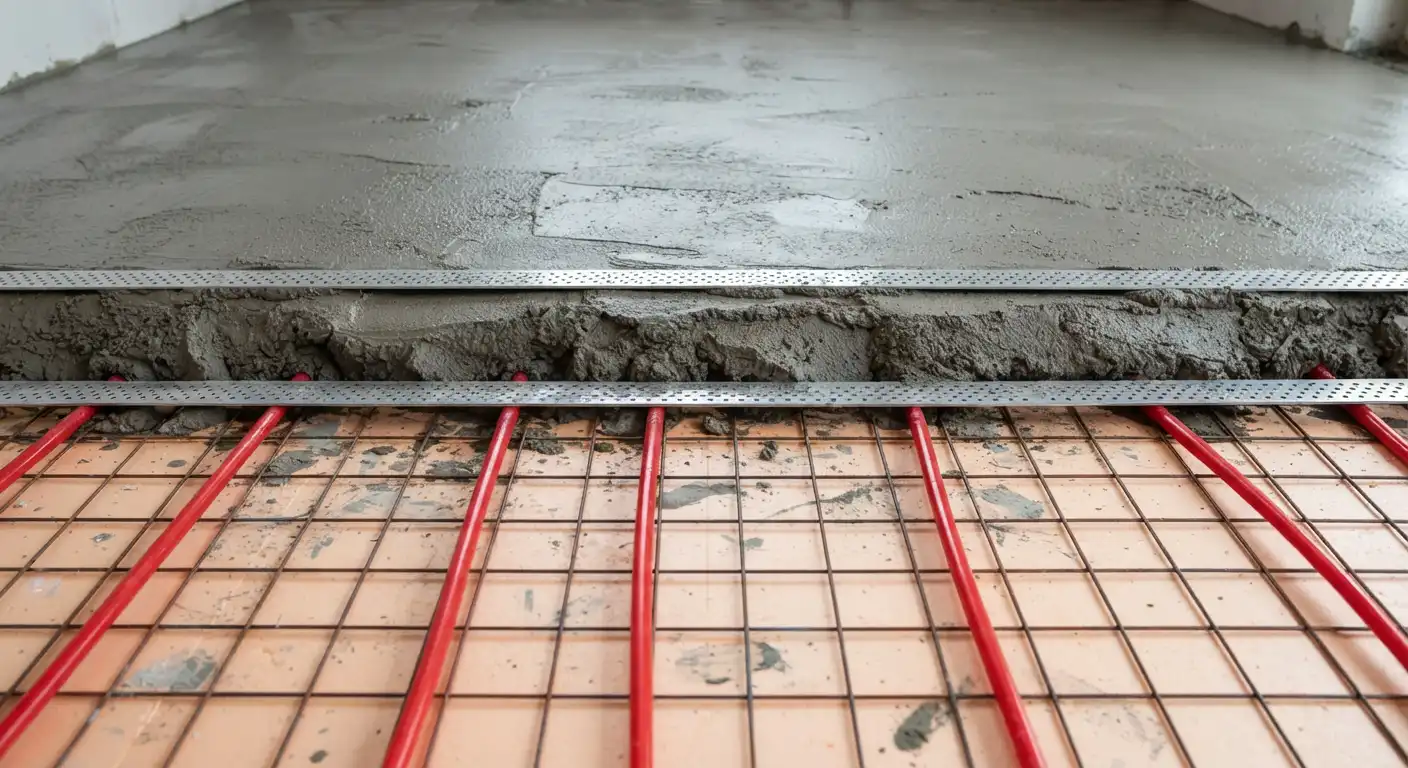
For many small and medium-sized UFH commissioning and screed-drying applications, electric boilers are a practical option. They need no fuel deliveries or flue, involve no on-site combustion and fit beside a manifold. Their thermostats allow the gradual temperature rises that screed drying needs. The main question is power. Our engineers will check what the site supply can provide during the site survey.
| Electric boilers | Fuel-fired Packaged Boilers | |
|---|---|---|
| Best for | Individual floors, zones, extensions, occupied buildings | Large slabs, whole buildings, high heat demand |
| Site needs | A suitable three-phase electrical supply | A fuel supply and space outside for the boiler |
| Outputs | Smaller outputs, with units combined as the floor requires | Higher outputs, with units coupled for larger loads |
| On site | No combustion, compact units | Weatherproof, lockable steel enclosure, sited outdoors |

For example, the 22kW Electric Mobile Boiler S2 and 36kW Electric Mobile Boiler S2 suit underfloor heating and screed drying. Typical jobs include an extension or a single floor of a new build. Both have a built-in heat exchanger, which keeps the temporary boiler circuit separate from the building’s UFH system.
Our projects have ranged from a single 22kW electric boiler to six units, plus the 36kW unit for larger floors. That experience helps our engineers size the right set-up during the site survey. On a very large floor, or where site power is limited, we might use one of our Packaged Boilers instead. It serves the UFH through a separate heat exchanger. The boilers connect to the UFH manifolds with flexible hoses, and one unit can serve several manifolds.
Temporary Boiler Hire For Screed Drying In Practice
Contractors widely use temporary boilers where the UFH pipework is ready before the permanent plant.
At Liverpool FC’s Kirkby training complex, we supplied two 22kW electric boilers for screed drying. The new facilities span a combined 9,200m². We connected each boiler to four manifolds on the underfloor heating circuits. This let warm water circulate gradually through the floor. We planned the hire for around 12 weeks. Read the Liverpool FC screed drying case study.
On a residential building, underfloor heating was the main heating system. We supplied six 22kW electric boilers with temporary pipework, a booster pump and a heat exchanger. We connected them to the permanent UFH manifolds. Read how the underfloor heating was brought into use with boiler hire.
Protecting The UFH Pipework With A Heat Exchanger
A heat exchanger keeps the hire boiler’s water separate from the building’s UFH circuit. That protects new pipework from debris or water chemistry that could harm it. It also lets the installer fill and treat the UFH circuit to their own requirements. The hire equipment never becomes part of the permanent system. The S2 electric boilers have one built in. For larger set-ups we supply standalone boiler heat exchangers.

Moisture Testing Before Floor Finishes Go Down
Completing the heat-up and cool-down cycle does not by itself prove the screed is ready for floor finishes. A screed can feel dry on the surface while holding too much moisture deeper down. Test it before anyone lays a finish. The acceptable moisture level depends on the screed type and the floor finish. Check the limit with the manufacturer of the floor covering or adhesive on your site.
If the screed is still too wet, run the UFH alongside dehumidifier hire. The dehumidifiers remove the moisture the heat drives out, so it doesn’t settle back on cold surfaces. For plaster and other wet trades across the site, see our guide to speeding up drying times on construction projects.
Planning On Drying Screed With Underfloor Heating On Your Next Project?
Give us these details and we can size the hire accurately:
- Screed type, depth and the date it was or will be laid
- Floor area and the number of manifolds or zones
- The UFH manufacturer’s heat-up protocol and maximum flow temperature
- Available power supply, or space for a fuel-fired boiler outside
- How long the floor needs heat, including the cool-down and testing period
Our boiler specialists can survey your site, check the manifolds and power supply, and recommend the right combination of boilers, hoses, pumps and heat exchangers for your screed and UFH protocol. Once the floor is finished, the same boilers can move on to space heating or system testing as part of our wider boiler hire for building and construction.
|
We deliver nationwide, offer same-day delivery where possible and provide 24/7 support for the length of the hire.
Call us on 0800 211 611 or book a free site survey to plan your screed drying programme. |
|---|
FAQs
When can I turn on underfloor heating after screeding?
Not until the screed has cured for the period its manufacturer states. Some calcium sulphate screeds permit earlier heating than traditional sand-and-cement screeds, but the exact waiting time is always on the screed manufacturer’s data sheet.
What flow temperature should underfloor heating run at to dry screed?
A low flow temperature at first, raised gradually in small daily steps up to the maximum the screed and UFH manufacturers allow. The figures vary by product, so take them from the manufacturer’s protocol and we will set the hire boiler up to match.
Can you speed up screed drying by turning the heating up?
No. Turning the heating up too early or too fast makes the screed shrink unevenly, which can cause cracking, curling at joints or debonding. The temperature should rise in small daily steps to the maximum the manufacturer allows, and no higher.