

 Canada

When critical infrastructure maintenance depends on a temporary reservoir level being reached and held, having the right equipment is only part of the solution.
At Sykes Pumps, we combine specialist pumping equipment, engineering expertise and coordinated logistics to deliver reliable temporary water management solutions.
When the site needed a temporary pumping solution to lower and hold reservoir levels during essential penstock inspections and maintenance, our specialists designed and installed a floating pumping station. We used electric submersible drainer pumps to maintain controlled reservoir levels throughout the works, achieving zero unplanned downtime.
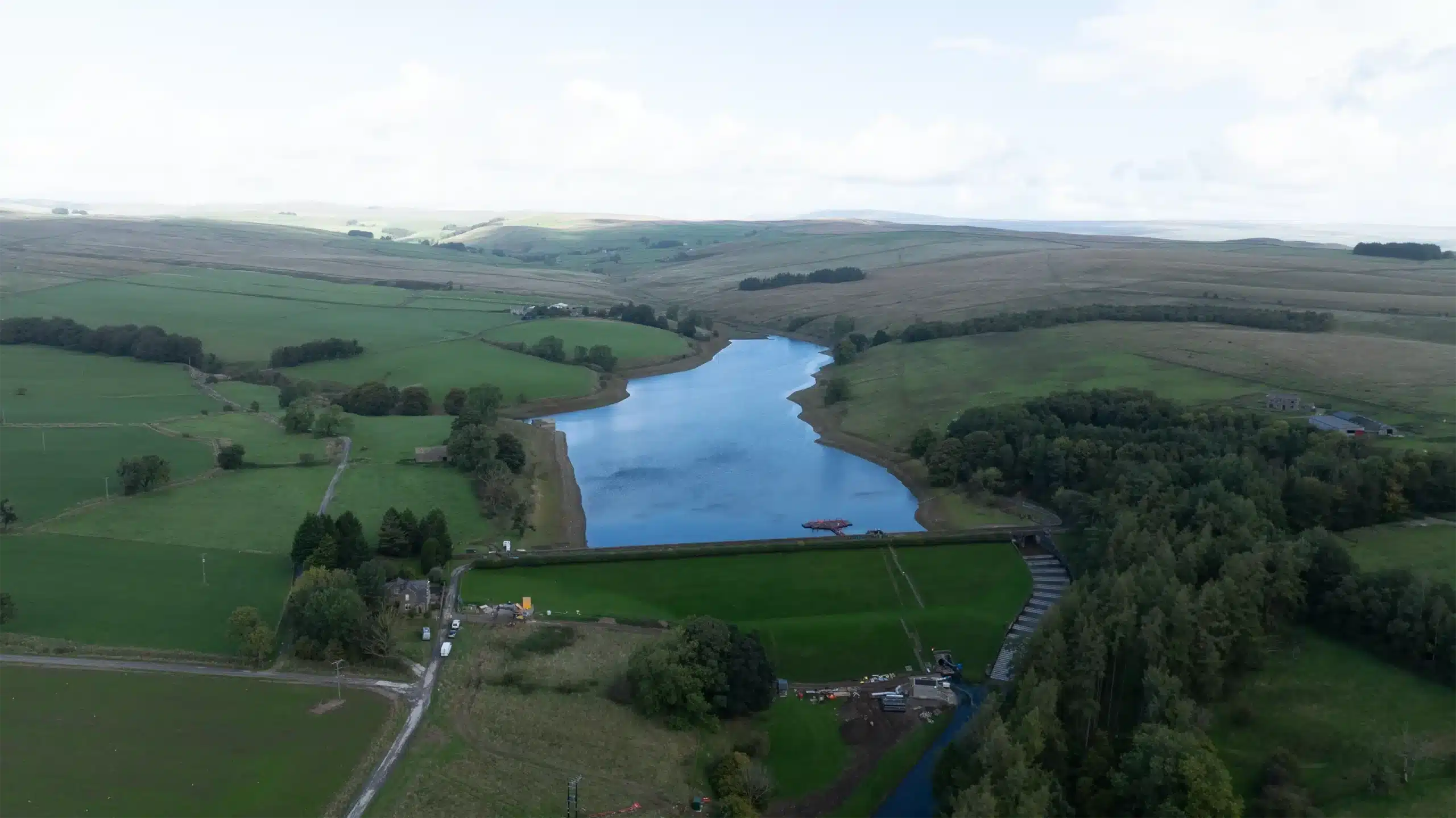
Why Reservoir Levels Have To Come Down For Penstock Inspections
Penstocks and draw-off gates are some of the most important safety assets on a reservoir. They control outflow and let operators lower the water in an emergency, so they need regular inspection and maintenance.
To work on them safely, the water level has to sit below the asset for as long as the work takes. That creates three operational demands:
- Hold the level, not just lower it. Rain and inflow keep coming, so pumping has to keep pace for weeks, not hours.
- Protect the watercourse downstream. Discharge has to stay within agreed environmental limits throughout.
- Never let the pumps become the critical path. If a pump stops, the inspection team stops too.
A Remote Site and a Long Inspection Programme
The reservoir level had to come down and stay down for the whole programme, not just on day one. With rainfall and inflow continuing throughout, the inspection team needed dependable pumping with no surprises.
The remote rural site added a logistics challenge. Every pump, pontoon, length of pipework and control panel had to be brought in and installed safely.
Discharge also had to stay within environmental limits as inflow varied with the weather.
Floating Pumping Station Built On Site
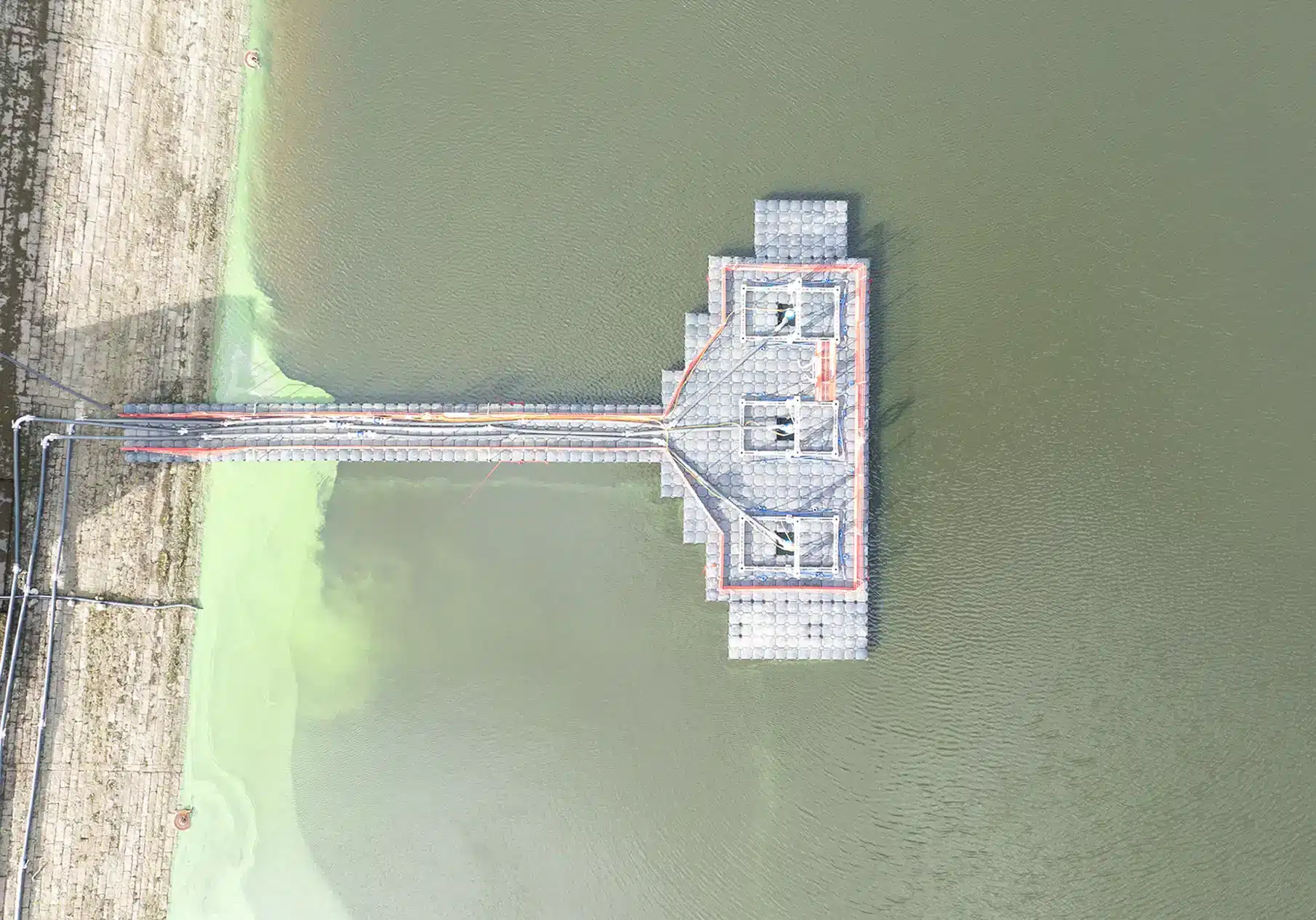
After our specialists assessed site conditions, we designed a floating pumping station that could be built on the bank, floated into position and controlled precisely from the shore.
- Mobilisation and site set-up
Pumps, pontoons, pipework and control equipment were mobilised to the remote site. Before any installation began, full site risk controls were put in place, all personnel were briefed and work areas were set up. - Pontoon assembly and pump installation
Our engineers assembled a modular pontoon on site and prepared and inspected the pump mounting structures. Three PX22 electric submersible drainer pumps were mounted on the pontoon, with all mechanical and electrical connections completed on the bank. - Deployment into the reservoir
The pontoon was floated out and anchored in the position that gave the best pumping performance. Building on the bank and floating out keeps most of the work on dry land, which is safer and easier to inspect. - Discharge pipework and VSD control
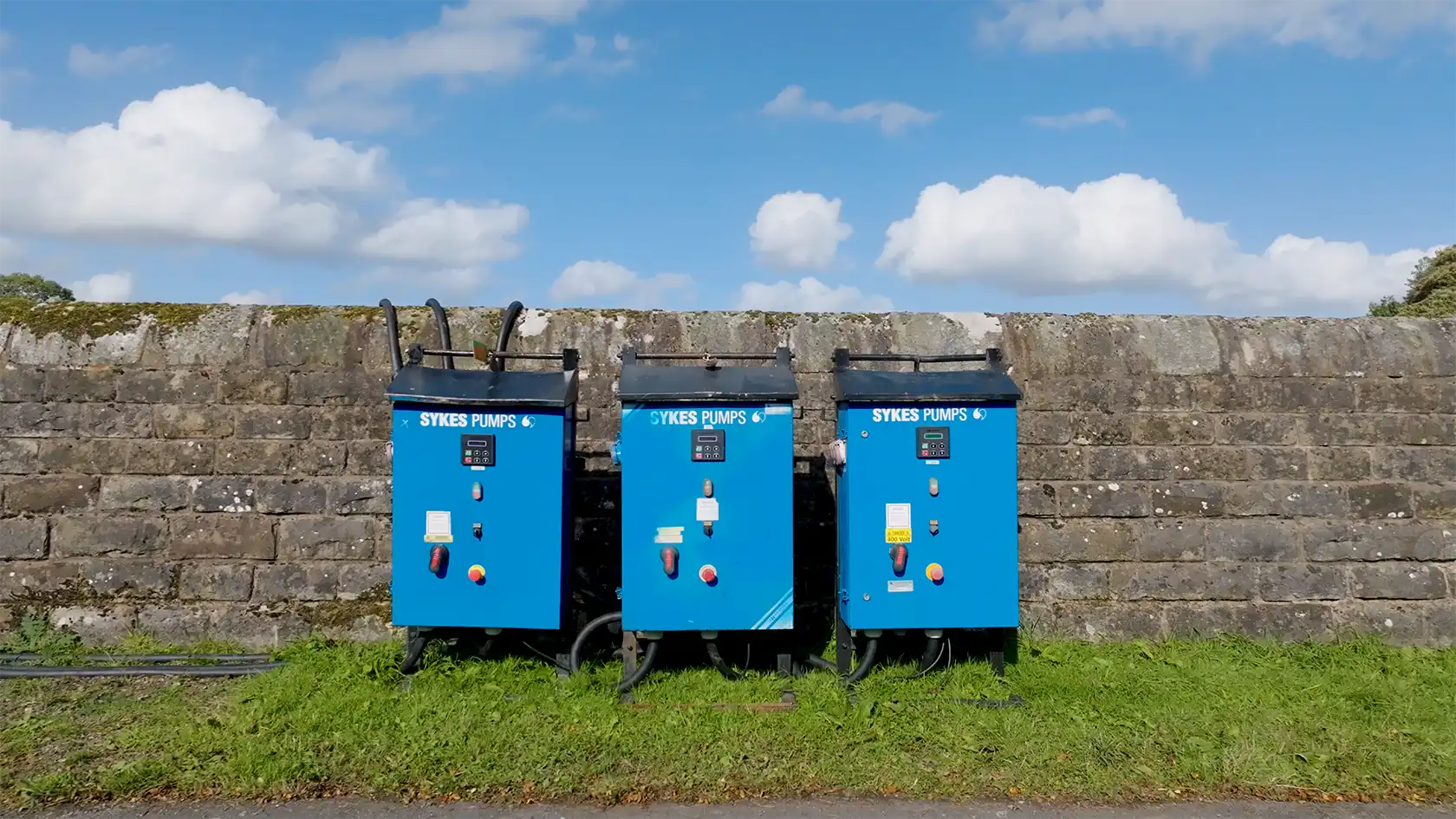
Discharge pipework was assembled and connected, and variable speed drive (VSD) control panels were installed on the bank. The VSDs let us adjust pumping rates as the reservoir level changed, rather than simply running flat out or switching off.
Why PX22?
The PX22 is a high-flow, high-head pump in our submersible pump hire fleet, built for general dewatering and long periods of uninterrupted use.
| 35 kW electric motor, 415V 3-phase | High capacity from a compact, electrically driven unit, with no risk of a fuel spill into the reservoir |
| Submersible design | Sits below the waterline and works naturally from a floating platform |
| Stainless steel components | High abrasion resistance for long-term duty in reservoir water |
| Built-in motor protection | Reduces the risk of motor damage during long periods of continuous running. |
| Low-maintenance design | Suited to a long inspection programme with minimal intervention |

The PX22 series offers flows of up to 160 l/s and heads of up to 96 metres, depending on the model and duty. Running three pumps on VSD control gave the system both capacity and fine control.
The Outcome: Zero Unplanned Downtime
The reservoir stayed at a safe, controlled level while the penstock inspections and maintenance went ahead. All three PX22 pumps ran with zero unplanned downtime, and discharge stayed within environmental limits throughout.
When the job was done, we removed every pump, pontoon and length of pipework. The site was cleared and inspected, and the reservoir returned to normal operation. In temporary works, the best compliment is that nobody can tell you were there.
Specialist Engineering Expertise Beyond Pump Hire
Successful temporary pumping projects need more than equipment from a hire fleet. They depend on understanding site conditions, installation constraints and how the system has to perform over the full programme.
On this project, our specialists:
- Assessed the site first and designed the floating pumping station around the reservoir, the access route and the inspection programme.
- Planned the logistics for a remote location, mobilising pumps, pontoons, pipework and control equipment so the site was ready to install from day one.
- Kept the work on dry land wherever possible by building the pontoon on the bank and completing all mechanical and electrical connections there before floating it out.
- Matched pumping to conditions, using VSD control panels to adjust flow as rainfall and inflow changed, rather than running flat out or switching off.
- Kept discharge within agreed environmental limits to protect the watercourse downstream throughout the works.
Download Case Study
 | Download Case Study: Sykes Pumps maintains safe reservoir levels for penstock inspection |
|---|

Planning Your Next Temporary Pumping Project?
| Whether you require reservoir level control, construction dewatering or specialist submersible pump hire, Sykes Pumps can help. Our specialists provide tailored pumping solutions designed around your project’s technical and operational requirements. Speak to our team today! Call 0800 211 611 to arrange a free site survey, or request one online. |
|---|
FAQs
What pumps are suitable for temporary reservoir level control?
Electric submersible pumps are commonly used for reservoir dewatering and water level management. For this project, Sykes Pumps deployed three PX22 electric submersible drainer pumps. Each has a 35 kW, 415V 3-phase motor and can deliver up to 160 l/s, with heads of up to 96 m. Built-in motor protection and stainless steel components suit them to long periods of continuous duty. Being electrically driven, they need no engines or fuel on the floating pontoon.
How does Sykes Pumps manage pumping projects in remote locations?
We plan delivery and installation before anything arrives on site. For this remote reservoir project, our team mobilised the pumps, pontoons, pipework and control equipment, then put full site risk controls in place before installation began. The modular pontoon was assembled on the bank, and all mechanical and electrical connections were completed on dry land before the pontoon was floated out and anchored. Variable speed drive (VSD) control panels on the shore let pumping rates be adjusted as reservoir levels changed, without anyone working out on the water.
What are the benefits of hiring a specialist temporary pumping provider?
A specialist provider offers more than pumping equipment. Sykes Pumps starts with a free site survey to determine the most efficient pumping solution for your site. We then handle equipment selection, delivery, installation and control. Our dedicated fleet of delivery vehicles and staff is on standby 24/7, 365 days a year, so support is available whenever your project needs it. One provider handles the whole job, so infrastructure operators can keep critical works on programme.


