United Kingdom
 Ireland
 The Netherlands
 Belgium
 Italy
Italy Germany
 Luxembourg
 Switzerland
 Canada
 Middle East
 Saudi Arabia
 Bahrain
 Oman
Oman Kuwait
 Qatar
Qatar
Somewhere on your estate right now there is a boiler that has not been under real load since the end of the summer term. It has stood through the shutdown, through whatever the contractors did or didn’t finish, and through the caretaker’s or estates officer’s leave. Most school heating systems spend the summer in exactly that state.
With the first cold snap, you will ask it for everything at once: full output, a cold start, every circuit in operation and a building full of people.
When heating systems sit idle through spring and summer, it is that sudden shift to full-capacity operation that exposes the fault, not the cold itself. School heating systems tend to fail when full demand returns, and that lands in the busiest weeks of term, when estates teams have the least slack to absorb it.
Working out what boiler hire for schools and universities would involve before that happens turns an emergency into a scheduling exercise.
What Should Education Estates Check Before the New Term?
Before the new term starts, test school heating systems under full load, inspect plant rooms, check heating and hot water circuits separately, review service contracts and identify where temporary equipment could stand.
Estates teams should also record boiler details, connection points and emergency contacts, establish who can authorise urgent expenditure out of hours, and agree which boiler hire supplier they would call.
These checks will not prevent every failure. They will remove most of the decisions that otherwise have to be made under pressure.
How School Heating Systems Differ Across Education Estates
Education estates do not all fail in the same way, and they do not all reach peak demand at the same time. Both differences are worth planning around.
Schools
School heating systems are often built around a single plant room serving a large proportion of the site. One breakdown can take out heating and hot water together, affecting kitchens and changing rooms as well as classrooms. Smaller estates tend to have less backup capacity and fewer people available to coordinate a response. So in case of a minor fault it becomes a site-wide problem rapidly and emergency boiler hire becomes the only way to keep the site open. Schools return to full occupancy in early September but often will not call for significant heat until October. This is why faults that developed over the summer surface weeks after term has started.
Colleges
Colleges contain a mixture of spaces with very different requirements. Standard teaching rooms sit alongside workshops, studios, catering kitchens, salons and sports facilities. A system that handles average demand comfortably can struggle when several higher-load areas run at once. Partial failures are common here and awkward to manage, because part of the timetable can continue while the rest cannot. That is often a case for heater hire in the affected block rather than temporary boiler plant across the whole site.
Universities
Multiple plant rooms, district heating networks and buildings of very different ages make university estates more complex, and failures cascade. Halls of residence add another concideration: they are occupied homes with continuous hot water demand, including overnight. They also fill within days as students arrive in late September. Conferences, summer schools and research facilities also keep parts of a campus live year-round, which reduces the opportunity to take plant offline for extended maintenance.
A contingency plan written for a single school building will not transfer to a campus. If you manage a multi-site trust, college group or university estate, planning at plant-room level is more useful than one institution-wide response.
The Temperature You Are Actually Obliged to Maintain
UK workplace regulations require employers to provide a reasonable indoor temperature. HSE guidance puts this at normally at least 16°C, and it applies to every space on an education site, from classrooms and libraries to sports halls, workshops and catering areas.
You are likely to hear 18°C quoted during a cold spell. That figure is the National Education Union’s position rather than a legal minimum: the School Premises (England) Regulations 2012 removed the prescribed classroom temperature, and academies were never covered by one. It still matters operationally, because it is the number a union representative will raise and the expectation you will be managing while the plant is down.
That workplace duty covers everyone on site: teaching staff, catering teams, cleaners, security and estates staff as well as pupils and students. It applies outside session times too.
The Detail Most Contingency Plans Miss
Heads and principals can act when a serious operational problem affects a site, including closing all or part of it. But closure is rarely available on day one, because parents and residents cannot be given adequate notice in time.
A plant failure overnight on a Tuesday does not hand you a closed Wednesday. It hands you an occupied building, a cold morning and a decision to make before 7am.
So the question worth answering now is not “at what point would we close?” It is “how do we get heat back into this building within a working day?”
The New Term Checklist for School Heating Systems
-
Run the system under full load before you need it
Not a five-minute test. Carry out a genuine full-building run up to operating temperature on a mild day, while there is still time to investigate whatever it exposes.
-
Walk every plant room with fresh eyes
Check pressure readings, corrosion, weeping joints and the condition of key components. If the plant room sits below ground, work out now where floodwater would go.
-
Check hot water separately from heating
The two often run on different circuits with different failure modes. A teaching block can cope for a day with reduced heating; a catering kitchen or hall of residence cannot function without hot water.
-
Confirm what your service contract actually covers
Response times, out-of-hours cover, exclusions, whether pumps and ancillary equipment are included, and who to call in an emergency. The middle of a breakdown is the wrong moment to discover a critical component sits outside the contract.
-
Identify where temporary plant would stand, for each plant room
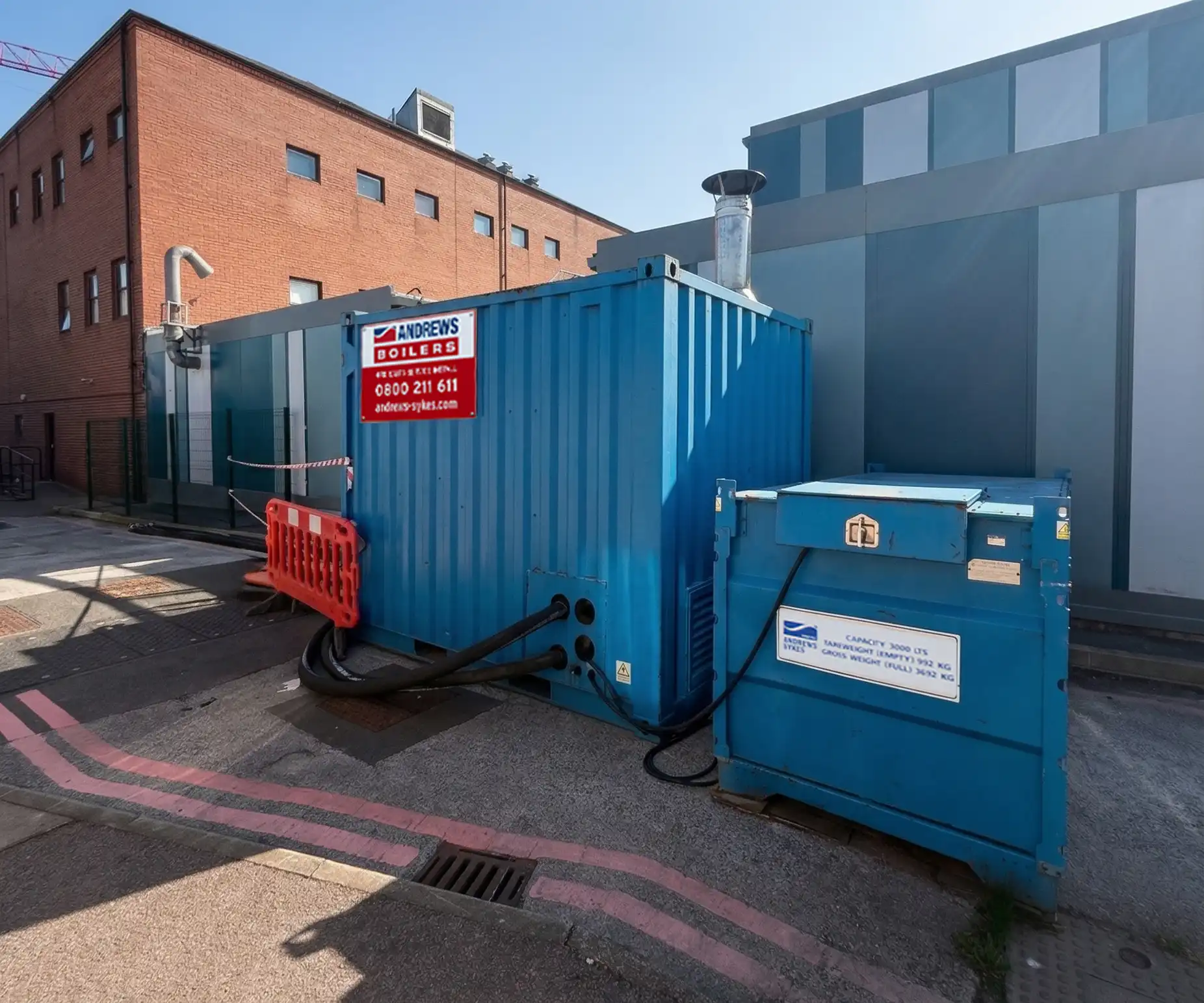
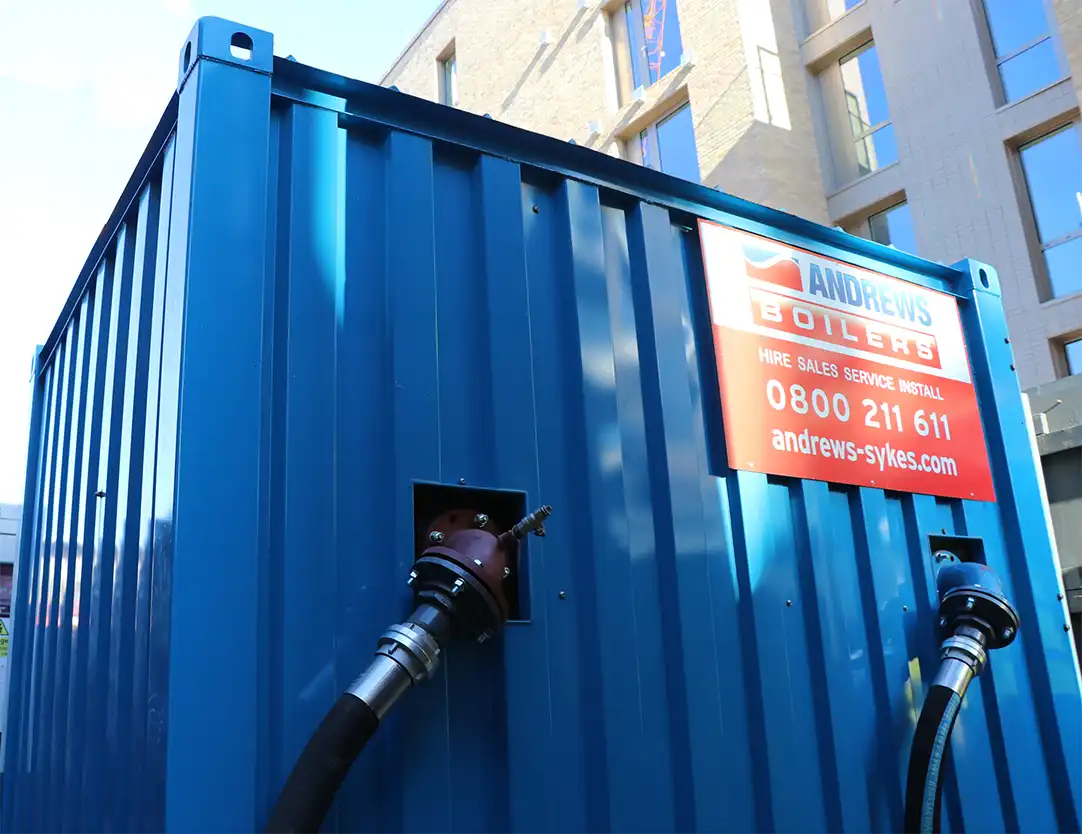
You need vehicle access, safe separation from pedestrian routes, a practical hose route into the plant room, and either a suitable electrical supply or space for a fuel tank. Establish it in daylight in September rather than in the dark in January. Our boiler hire for schools and universities page sets out footprint and access requirements by unit size.
-
Find out who signs off emergency spend, and who deputises
If it needs governor, trust or finance-committee approval, map the out-of-hours route now. A technically straightforward installation can still be delayed because nobody knows who can authorise it. Where that approval depends on making a case first, why boiler hire is a smart investment for schools and hospitals sets out the argument.
-
Photograph plant rooms and record key details
Model numbers, capacities, connection points, manifolds, entrances and the proposed temporary boiler location. When you are speaking to an emergency boiler hire specialist during a live breakdown, being able to send that information shortens the initial assessment considerably.
What a Heating Contingency Plan Actually Contains
It does not need to be a long document. Two sides of paper per plant room can carry the heat load required in kW, whether heating alone or heating plus domestic hot water is needed, the agreed location for temporary plant with access notes and photographs, connection points and fittings, named out-of-hours contacts including your hire supplier, the emergency spending approval route with a named deputy, and the maximum acceptable heating outage for that building.
That last point matters. A classroom block, catering kitchen, sports hall and hall of residence do not have the same tolerance for an outage. Recording those priorities in advance tells an estates team where temporary heating goes first when several systems are affected.
What Rapid Deployment Looks Like
Rapid response is something any supplier can claim. Worked examples are more useful.
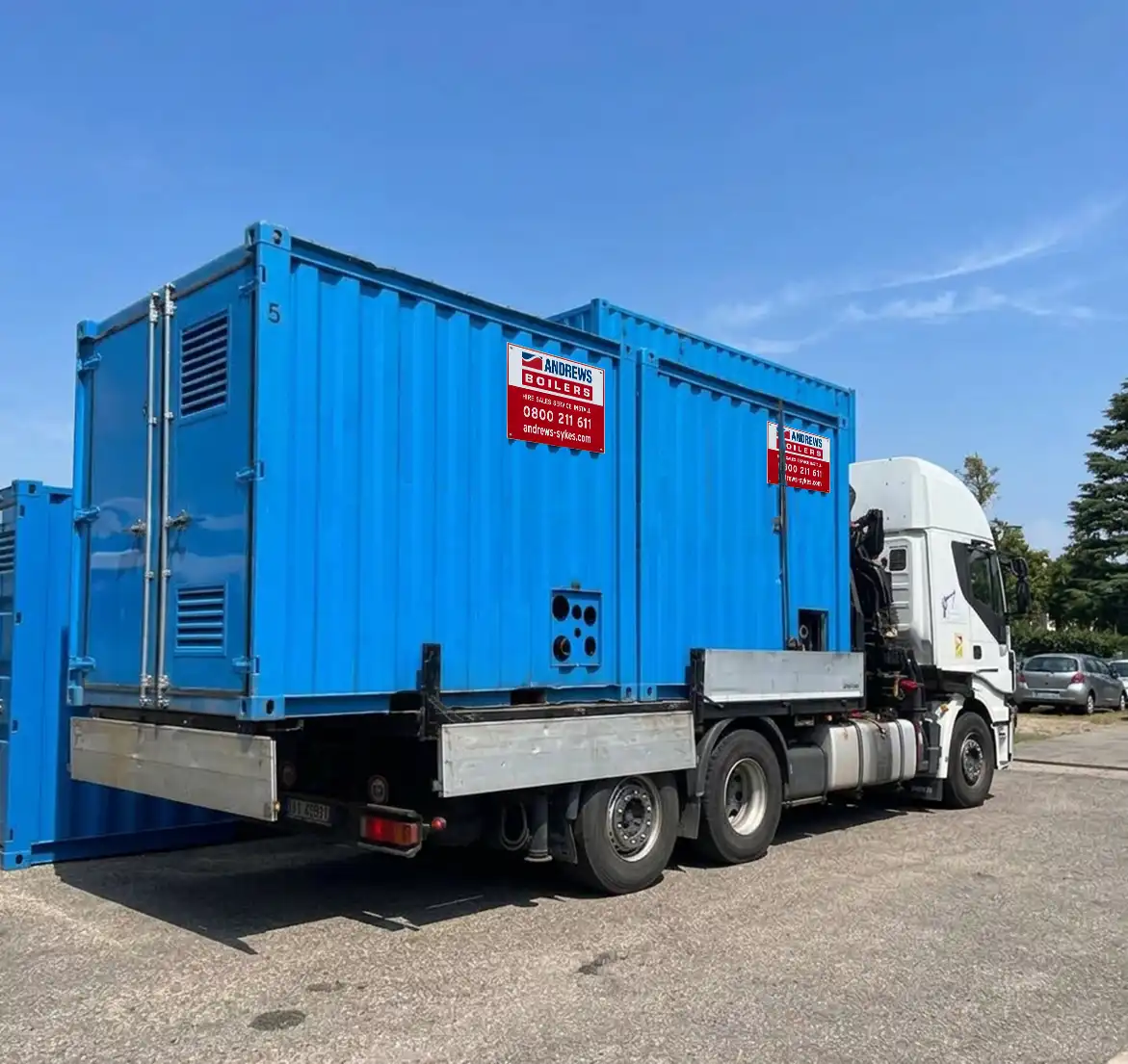
When a fire destroyed the biomass boiler at a specialist school in North Wales, our technicians arrived at 8am the following morning and, working around blocked access to the boiler house, installed a 300kW packaged boiler and a 3,000-litre fuel tank with the building heated by 1pm. The full story is in our case study, Warming hearts and facilities following school boiler breakdown.
When boiler failure cut heating and hot water to an entire university building in Bedfordshire, a temporary unit stayed on hire for four weeks while the permanent plant was repaired, giving the estate time to complete the work properly rather than rushing it simply to restore heat.
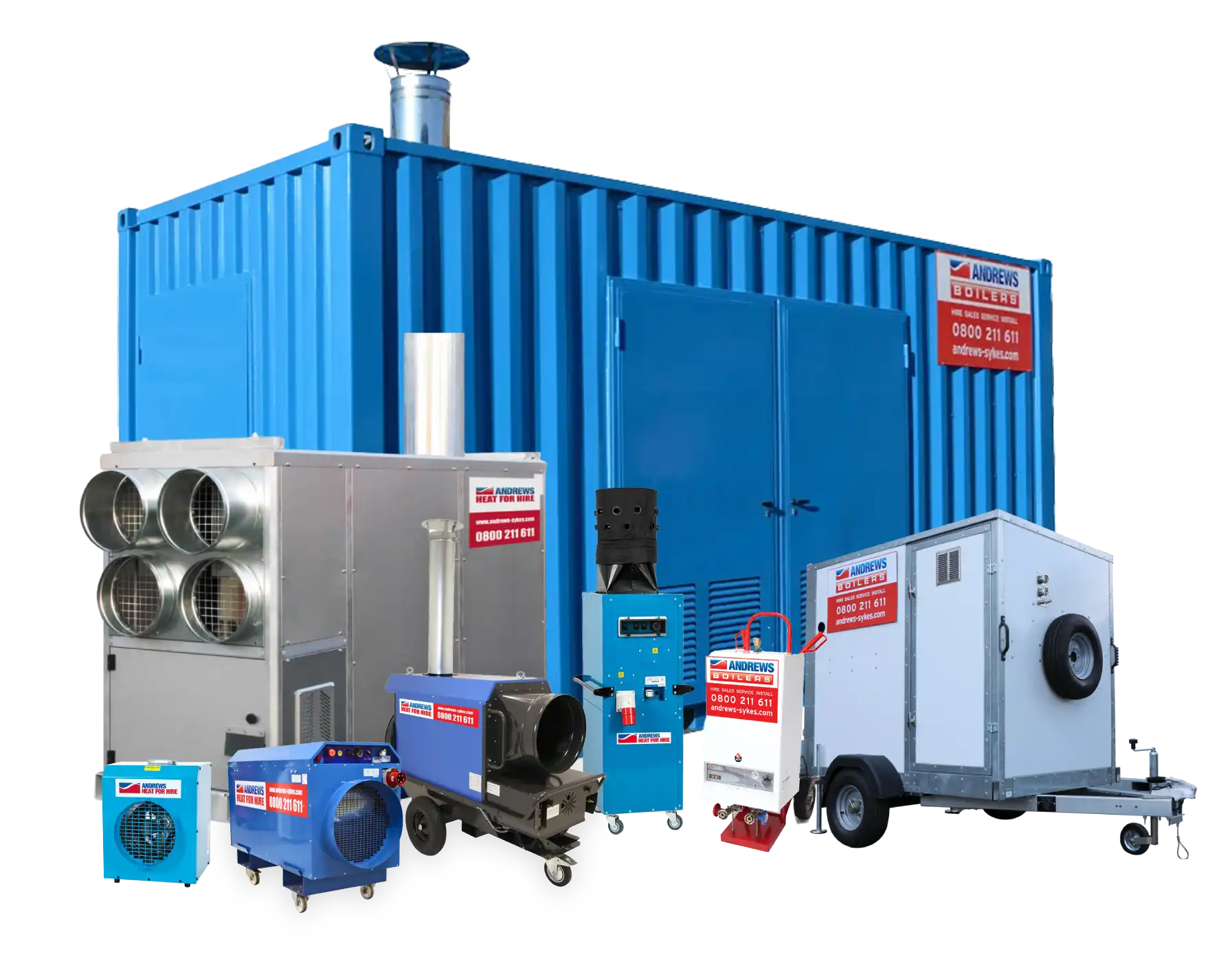
Behind both: a 24-hour service, one of the UK’s largest fleets of containerised packaged boilers, oil-fired heaters and portable electric boilers, with delivery, installation and commissioning handled by our own engineers.
Is Your Estate Ready for Winter?
|
If you would rather have the framework in place than react to a failure, our Andrews Boilers engineers can carry out a no-obligation site survey to establish your heat load, access requirements, connection points and a suitable location for temporary plant before temperatures fall.
Call 0800 211 611 or enquire online to discuss your requirements. |
|---|
FAQs
What size temporary boiler does an education site need?
It depends on the volume and fabric of the building, and on whether domestic hot water is needed alongside space heating. Recent education installations have ranged from a single 100kW unit at a small special school to two 500kW boilers at a primary school that lost its entire plant room. Packaged boilers are available from 100kW to 1,500kW. A free site survey, or our online heating calculator, will give a figure specific to your building.
Can a temporary boiler connect to a campus district heating network?
Yes. Temporary units connect through plate heat exchangers, and access restrictions can usually be designed around. At one university, a narrow entrance tunnel made it impossible to lower a large boiler into the plant room, so two 36kW electric boilers were manifolded together and connected to the existing plate heat exchanger. On multi-plant-room and district systems, each building is assessed separately.
When should an education estate arrange a site survey?
Before the heating season rather than during it. A survey carried out in September establishes heat load, siting and connection details while there is no time pressure, which means an emergency response can concentrate on deployment rather than assessment.